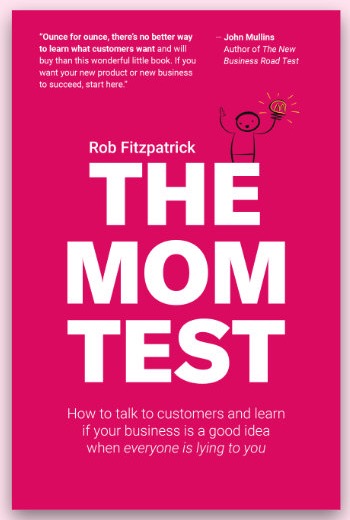
Book Summary: The Mom Test
Ask your mom whether your business idea is any good and she'll say yes. Not because it is, but because she loves you. That's the starting point of The Mom Test by Rob Fitzpatrick. The trouble is that everyone behaves like your mom. Show people an idea and they'll be polite. They'll say it sounds great, that they'd totally use it, that you should let them know when it launches. None of that is data. It just feels like data.
The book was published over 10 years ago (2013), but it's still one of the most useful short books on product management I've read.
How to pass the Mom Test
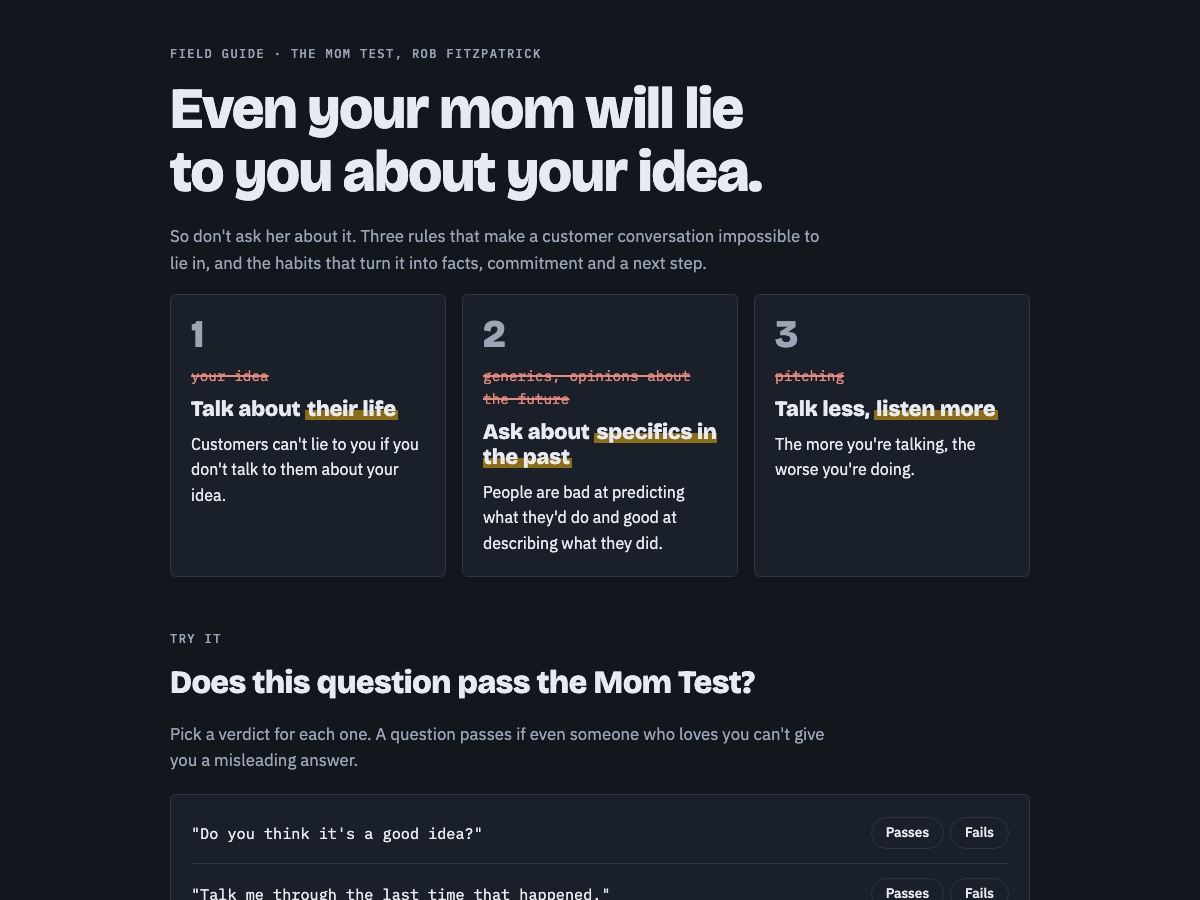
The fix is simple, and it fits in three rules:
- Talk about their life, not your idea.
- Ask about specifics in the past, not opinions about the future.
- Talk less, listen more.
A question passes the Mom Test if even someone who loves you can't give you a misleading answer to it. "Would you pay for this?" fails. "When did this last happen to you, and what did you do about it?" passes. People are bad at predicting what they'd do, and pretty good at describing what they did.
The rest of the book is about the habits around those rules. How to deflect compliments, anchor fluff back to real events, and dig beneath feature requests to the problem behind them. How to keep conversations short and casual rather than turning them into formal interviews. And how to end a meeting with something real: a fact, a commitment (time, reputation or money), or a next step. If a meeting "went well" but nobody gave up anything, it probably didn't.
Why I liked it
It's short, practical and a bit funny. More importantly, it's honest about how easy it is to fool yourself. Several of the "signs you're just going through the motions" hit close to home: you talked more than they did, you got an unexpected answer and it didn't change anything, you weren't scared of any of your questions.
That last one stuck with me. If none of your questions could hurt your plan, you're not really testing it.
A field guide
To make the ideas stick, I turned my notes into a one-page Mom Test field guide. It has the three rules, a little quiz on whether a question passes the test, the bad-data patterns and how to handle them, and a before/during/after checklist for customer conversations.
It's meant to be skimmed five minutes before a call, which is roughly how long it takes, according to Fitzpatrick, to find out whether a problem is real.